Showing posts with label travel. Show all posts

Saturday, January 9, 2010

New Acropolis Museum

Although my trip was dominated by ancient architecture, I still hoped to check out some new buildings. Since Zaha’s MAXXI museum in Rome was not open yet, the New Acropolis Museum by Tschumi became my biggest interest for modern architecture.

The museum came into sight right after I walked out of the metro station. It’s much closer to the Acropolis than I imagined. The building has three articulated levels: the ground level is aligned with the old city grid, while the top level (the Parthenon Gallery) is aligned with the Parthenon. A visual dialogue is created between the museum and the Acropolis: first, the museum is built right above some archeological remains dated back almost 2500 years.


Second, the café terrace on the second floor both overlooks the excavations and embraces the view of the Acropolis. Third, the curtain wall in the Parthenon Gallery also offers a great view of the Parthenon itself.


The glass floors at different levels create a vertical transparency. It exhibits not only the excavations beneath the first floor, but also the people walking on the floor above. Natural light is maximized in exhibition space by the use of skylights and curtain wall. It is amazing to see the sculptures under the constantly changing daylight, quite similar to their original outdoor condition. (the interior pictures are from the internet since photos are forbidden inside the museum)


Tschumi always claims film’s strong influence on his design. Some cinematic effects are quite noticeable in the museum. For instance, in the Parthenon Gallery the marbles of the Parthenon Frieze are oriented in their original locations, with the missing portions left blank. Each framed marble panel reminds me of a single film frame displayed in sequence for storytelling. The Parthenon in direct view also provides the perfect context for appreciating the artwork.


Another filmic infusion is the evening projection of the Erechtheion caryatids on the façade. I missed it as I had to go back to the ship before dark:(


I love the simplicity and elegance of the museum which reflects the essence of Greek architecture. Admission is only 1 EUR, unbelievable for a world-class museum like this!

Thursday, December 31, 2009

To Venice


You are a labyrinth interwoven with water. I don’t even try to find my direction since reading a map is both useless and unnecessary.

I understand the very charm of you is not in those famous landmarks. The best way to appreciate you is by wandering, like in the bookloft.

I can’t explain my fascination with water and anything standing in the water. But I do know why I love the intricate network of narrow alleys - a reminder of the hutongs in Beijing. You happen to obsess me with both. How can I step away from you?

I want to leave my footprints on every street and every bridge of you. Three days seem too short! Wish I can walk in you endlessly, never ever stop. I would lose my way forever, like the protagonists in Last Year at Marienbad

Monday, December 28, 2009

Surprise in Ancona

I didn’t expect much of Ancona before the trip, as Google Image only came up with some unattractive photos. However, when I walked deeper and deeper into the city , I discovered some unpretentious but interesting buildings.


One of the surprises is this contemporary apartment building among the classic blocks. It sits on a slope with its roof sloping in the same direction. The form of the building is not uncommon, a popular method of carving into one big block. A balance between individuality and unity is achieved by providing each unit a good amount of character.


Walking along the stepped street in front of the building was interestingly pleasant, as I observed the changing face of each window and various plants along the street or on the balconies. As I walked up the steps, I saw another building with a similar look further up the slope. But I found this one more appealing because of the terraced garden on the back.


The landscape design is so modest but charming, just like Ancona itself. I especially enjoyed the various paths leading to different levels and directions, and the rich texture of the paving bricks...


Thanks to Google Earth, I not only located the building, but also got to see the overall plan. The aerial photo even reveals some interesting designs on the roof terrace.


Sunday, December 27, 2009

Thursday, December 10, 2009

Old Maps


I love old maps for their richness. They are usually very artistic and narrative instead of being purely technical like most maps today. On our way to the Sistine Chapel inside the Vatican Museum, we passed through the gorgeous Gallery of Maps. Besides the 40 large topographical maps of Italian regions, there are also several graphic maps depicting important cities. I was so excited to find three places I just visited -

The most noticeable one is the map of Venice at the end of the gallery. If you look closely, you will find captivating details of the Piazza San Marco.


The most noticeable one is a map of Ancona. I find it much less successful since the sail boats are too dominant whereas the city itself is hard to read.


The following one doesn’t show the name. My best guess is Lucca, judging primarily from the shape of the city wall. But I'm not sure about the pentagon at the bottom left corner.


I later found out that the maps in the gallery were commissioned in the late 1500s by Pope Gregory XIII. It took friar and geographer Ignazio Danti three years to paint. Although made 500 years ago with ancient instruments such as the Astrolabe, the maps are said to be amazingly accurate. I found an article discussing the accuracy of Danti's maps, very interesting:

http://goeurope.about.com/od/travelphotography/ig/Travel-Pictures/Vatican-map-Garfagnana.htm

Sunday, December 6, 2009

Footprints in Eastern Mediterranean


My first trip to Europe was almost perfect
10 nights on land, 7 nights at sea
Each place has its own charm -

Rome is POWER
Vatican is DIVINITY
Florence is ART
Venice is ROMANCE
Siena is EXQUISITE
Lucca is WARMTH
Pisa is FAME
Ancona is UNPRETENTIOUSNESS
Athens is ELEGANCE
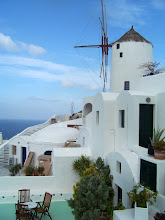
Santorini is SCULPTURE
Mykonos is FESTIVENESS
Corfu is PICTURESQUENESS
Dubrovnik is PERFECTION

I left my heart in Venice, Santorini and Dubrovnik. Will blog them in detail when I have time!

Monday, October 19, 2009

Foliage Weekend

Living in Pennsylvania for six years made me a fall-foliage addict. Although Ohio lacks the hilly topography which creates dramatic views, I still found favorite foliage places such as Hocking Hills and Highbanks soon after the move. This year we have to skip the long ride to Hocking Hill and took Chloe to the three beautiful metro parks: Highbanks, Prairie Oaks and Battelle Darby Creek.

Yestersday was actually our first time going to both Prairie Oaks and Battelle Darby Creek and we were really impressed. Prairie Oaks has three adjacent lakes with Big Darby creek running in between. We walked on a beautiful trail with a lake on one side and the creek on the other. Since most trails are pet friendly, we saw many happily walking dogs. Next time we'll bring Rexie for sure despite his car sickness!

Prairie Oaks

Driving south about 15 minutes, we arrived at Battelle Darby Creek. The two parks are linked by the same creek: Big Darby. We found a gorgeous view overlooking the creek as well as more colorful foliages in the woods here which recalls Highbanks.

Battelle Darby Creek


What we explored in either park is only a small portion of the entire land - more to discover in the future!

Sunday, March 8, 2009

Tara Dononvan @ CAC


I’ve always been impressed with Tara Donovan’s vision of transforming ordinary everyday materials (such as styrofoam cups, paper, scotch tape, pins, toothpicks) into extraordinary artwork. Her sculptures invent a world between artificial compositions and natural landscapes. So when I learned that her works are on exhibition at CAC, I was thrilled and went with Ian yesterday. Perhaps I shouldn’t have taken such a long ride at this moment, but I just couldn’t resist the opportunity and hopefully this experience would spark some artistic cells in my little darling’s growing brain ^_^

It was at least my third time in Zaha’s building. This time the lobby ceiling becomes part of the exhibition with Tara’s famous cloud-like hanging piece. Before then, I only saw photos of this piece hanging in an empty minimalist space where the sculpture exhibits a pure and overwhelming gesture. But here it quietly integrates with Zaha’s dynamic interior, which reflects Tara’s idea of making the sculptures grow out of architectural space.

The magical part of seeing the real works lies in the shift of scale. It offers the viewer a fascinating process of discovery as you move around the sculptures. One of my favorites is a wall piece called ‘Haze’. At the first sight, it appears to be an icy and spongy surface with naturally formed bumps. When you walk closer, it seems softer and more translucent. The reflection of your moving body also makes the surface alive. When you get real close, you are amazed that the material is nothing more than clear plastic drinking straws – thousands of them! Another phenomenal piece is made of tiny metallic film tape rings which form huge organic patterns filling up three consecutive walls. I looked at a small portion and then looked up at the large pattern, the rings suddenly appeared to be shiny water bubbles glowing and expanding endlessly in front of my eyes.

Most of the sculptures are so large, which makes me wonder how they are shipped and assembled for each exhibition. My best guess is that each piece is kept in several parts in which the units are glued together. These parts are then put together on site, and necessary adjustments are made to make the piece fit into the specific exhibition space. Even like that, it still requires a huge amount of time to prepare for the show.


Unfortunately, photos are only allowed in few areas. But this unique experience Tara brought to me was permanently imprinted in my head. When we walked down the fancy stair to the first floor, we found the lobby was fully packed due to a performance. We watched for a while, soaked in the festival atmosphere rarely found in downtown Cincy, and then headed for IKEA for some baby stuff. It was a gorgeous feel-like-summer day filled with satisfaction…

Monday, September 22, 2008

Mexico Trip - Palenque


All of four Maya ruins we visited are impressive. The huge pyramids make Teotihuacán the most spectacular; the small-scale ruins against the turquoise Caribbean sea make Tulum the most charming; the various architectural styles make Chichen Itza the most architecturally striking. But my #1 favorite is Palenque, a Maya city built between the 7th C and 10th C located in the state of Chiapas. Palenque gained its name from the village Santo Domingo de Palenque 9km away, since its original name was lost in time. Palenque seems more breathtaking due to its dramatic geographic setting. The morning mists in the mountains add an otherworldly atmosphere to the ruins.

First discovered in 1773, Palenque has been photographed and documented a few times by European expeditions. The first professional excavation took place 1949-1952 led by
Mexican archaeologists. The excavation still continues today, and archaeologists estimate that only 5% of the whole city has been uncovered so far! Since Palenque was deeply buried in the jungles for centuries, the process of revealing it was exactly the opposite of creating a new park: instead of building everything out of nothing, Palenque was unveiled by removing everything around it, a method of subtraction rather than addition.

Of all the visible structures in Palenque, the palace is the most fascinating to me. The whole palace is a maze: as you walk, you pass through different corridors, courtyards and rooms, while the tall tower always forms a visual center and implies the directions. Beautiful carvings are found on huge stone slabs in some courtyards. The palace is at once architecturally sophisticated and spatially interesting.


East of Palenque in Guatemala stands the larger Maya ruin Tikal. Hopefully I can get there someday!

Tuesday, September 16, 2008

Mexico City - José Vasconcelos Library


Before my trip, I saw the above interior photos of José Vasconcelos Library, a huge and modern library in Mexico City. But when I really got there, I was disappointed to find it has been closed for a while. The newly updated wiki page gives the following account -

The Library had to be closed down in March 2007 because of defects of construction. The Superior Auditor of the Federation detected 36 irregularities in its construction and issued 13 motions of responsibility for public servants of the federal government. Among the irregularities found was the misplacement of marble blocks at a cost of 15 million pesos (roughly 1.4 million dollars).

What a shame such a good design didn't get built well and so much money was wasted! I happened to find someone's blog with many pics of this library when it was still in use -

Saturday, September 13, 2008

Mexico City - Luis Barragán


Luis Barragán is the most important figure in Mexican modern architecture. Visiting his house and studio naturally became a priority for our 2-day in Mexico City. Trained as an engineer, he practiced as a designer in not only architecture, but also furniture and gardens.

The solid surface at the entrance separates the house completely from the street. The interior presents a totally different world filled with light and colors. The main space is double-height, and divided by low walls. The huge window opening to the garden blurs the boundary between inside and outside. The nicely designed garden forms a mini jungle in the courtyard.

Barragán widely traveled in his earlier life, so a good collection of books and crafts from various nations are found throughout his house. Inspired by Le Corbusier and Mies, Barragán's design shows a pefect fusion between European modernism and indigenous cultures of Mexico.


Light and shadow was a major interest in his design, for instance, the play with light and shadow by adjustable shutters, the use of windows and skylights to embrace views and natural light. The subtle use of light and shadow simply adds a phenomenal quality to his minimalist style, which also had a strong influence on Tadao Ando.

The house is an introvert space speaking of its own language inside the
bustling city, a space of poetry written in light, texture and color. Unfortunately, we didn't have time for Francisco Gilardi House and Tlalpan Chapel, two of his excellent works in Mexico City.
(Note: Photos are only allowed at the roof terrace, so I had to use internet pics for other areas)

Wednesday, September 10, 2008

Mexico City - Blue House


My travel motivation often comes from film. I had been dreaming about Mexico City since I watched the film Frida (2002). The images in the film are just unforgettable: the vibrant colors of Mexican architecture, the spectacular pyramids of Teotihuacan, and of course the imaginative paintings by Frida...I became more eager to see Mexico after seeing Sergei Eisenstein's fabulous documentary Que Viva Mexico! (1932) in which he captured the Mexican charm at its purest.

The 'blue house' where Frida grew up has become today's Frida Kahlo Museum. It's located in Coyoacán, a cultural neighborhood in the south of the city. Eisenstein was actually a friend of Frida and her husband Rivera, and visited them in this house before.

Before stepping into the exhibition rooms, I was already overwhelmed by the beauty of the courtyard: the bright blue stucco walls against textured grey stones, surrounded by evergreen tropical plants and primitive sculptures. A video of Frida dressed in traditional costume dancing around the courtyard was being played at one corner. The more I walked around, the more alive Frida appeared to be.

The interior houses her paintings, artifacts, photos and letters. The large and bright studio on the second floor offers perfect views into the courtyard. The dried oil colors were still lying on the table...

Wherever you go, the space is full of art, life, beauty and modesty. It was the first time I was so moved by vernacular architecture instead of a starchitect's works.

Tuesday, September 9, 2008

Paths in Mexico


Our past Mexico trip was unbelievable - We took seven flights and over 20-hr bus rides to get to nine places during the eleven days. Above is a map showing our itinerary inside Mexico (blue line for flight, red line for bus tour; click on the image for a better view).

The places we visited have different characters: from the global city Mexico City to traditional towns like Merida, from beautiful carribean beaches to lush tropical rainforests, and three major maya ruins with different charm...We had to skip places like Puebla and Oaxaca due to time constraint.

Mexicans are very friendly and happy people. Wherever we went, there were locals offering us help even though they don't speak a word of English. I really fell in love with Mexico and hope to return someday.

Tuesday, July 8, 2008

Toronto Arch Tour

As a water-front metropolis, Toronto is not as appealing as New York, Chicago or Seattle. My initial purpose of the trip was to see several new buildings in town and to visit the spectacular Niagrara Falls the 4th time.

Our first stop was the Royal Ontario Museum by Libeskind. I was so eager to see a Libeskind’s building, but felt a bit disappointed when I got there. Maybe I’m no longer strongly attracted by striking forms. The play of form here didn’t invent a new model for exhibition or offer the visitors a new way to experience a museum, almost the same feeling I had when visiting Akron Art Museum by Coop Himmelblau. To me, the only interesting space is the Stair of Wonders which combines the sculptural form with fascinating object display at each level. However, I still want to visit Berlin Jewish Museum since the spatial sequence generates deeper meaning.

Gehry’s new addition to the Art Gallery of Ontario is under construction right now. Unlike his signature sculptural exterior, this building has a simple linear transparent skin while the crazy forms are kept inside.

Ontario College of Art & Design by Will Alsop is such a playful and structurally challenging building. I really hoped to get to the top, unfortunately it closed during the weekend.

Later we walked by the Graduate House by Morphosis and Leslie L. Dan Pharmacy Building by Norman Foster on Univeristy of Toronto campus, the last two stops of my architectural tour.

Friday, February 22, 2008

Jamaican Hummingbirds


One of our Caribbean cruise stops was Montego Bay, the second largest city in Jamaica. Jamaica was among my dream destinations mainly because of reggae. But this short visit didn’t give me the opportunity to explore the music, except the Bob Marley songs played by our tour guide on the bus.

Compared to most Cribbean islands which are flat, the mountainous topography makes Jamaica especially beautiful. With its lushly covered mountains and waterfalls, it reminds me a lot of Hawaii. Besides the gorgeous natural beauty, my unexpected amazing experience was feeding hummingbirds at Rocklands Bird Sanctuary, established by nature-lover Lisa Salmon in 1954 and was opened to the public 8 years later.

This place is located in the secluded hills of Anchovy, overlooking Montego Bay. The courtyard is just a mini emerald city, where time slows down for a deep breath. We sat there holding honey-water bottles the caretaker gave us, waiting for the beautiful creatures to come. A few minutes later, they started gathering. The moment the first brave hummingbird stood on my finger sucking the honey-water, I held my breath.

I only sighted female ruby-throated hummingbirds occasionally in my backyard before, but nothing compared to the hummingbirds here at Rocklands. Jamaican Streamertail (Red-billed Streamertail) is the most widespread hummingbird in Jamaica, also Jamaica’s national bird. The fluorescent green colors on their bodies are just as vibrant as the surrounding tropical leaves under the sunlight. The males have the longest tails of all hummingbirds, extremely elegant. Jamaican Mango is another common species in Jamaica with purple red heads. Unfortunately, my camera ran out of battery five minutes after we arrived at Rocklands, so most pictures here are from low-resolution video captures.

Monday, January 7, 2008

Food Memories of Tokyo

This past weekend was filled with deliscious food. My parents made my favorite dumplings: lamb+wintermelon! I made sushi, although the simplest type :) Sushi actually originated as a method of preserving fish in China and Southeast Asia. It was introduced to Japan in the 7th century and transformed into the Japanese style which is as known to the world.


I can't helping recalling the wonderful food experiences in Tokyo. You can complain how expensive things are in Japan, but NOT food! We tried food at different places, ranging from 500 - 3500 Yen per person: from take-out restaurants, fast-food places to fancy restaurants, from the traditional snack stands at Asakusa market (浅草市場) to the amazing sushi bar at Tsukiji Fish Market (築地市場) - none of them let me down!

The everyday fast-food sushi would be the conveyor belt sushi (回転寿司, kaiten-zushi). It's fast, inexpensive and fun.


There's a sushi street at the famous Tsukiji Fish Market. We tried 大和寿司, recommended by locals. It had the longest line in the front and we waited for nearly an hour to get in.


We ordered sushi combination since we were still confused with all the different names. The sushi tasted extremely fresh, tender, with a slightly sweet flavor, definitely my BEST sushi experience!!

I'm also impressed with Japanese desserts. They are not too sweet or too thick, just perfect. The super tasty green tea cake, grean tea cream puff and fried ice-cream I had in Tokyo even topped my all-time favorites such as Tiramisu, Crème brûlée and Yule Log cake!

Japanese cuisine does not have as many flavors or styles as Chinese cuisine, however, the look of the food together with its serving wares, displays a deeper sense of design. Although Japan is an economically rich country, people there eat less and faster which reflects the very Japanese notion of efficiency and no-waste.

Thursday, January 3, 2008

from One Columbus to Another

Columbus IN, a city with a population of less than 40,000, ranks No.6 in terms of architectural innovation and design in US by AIA. I finally made it there right before the new year. It was quite a dramatic journey from one Columbus to another! The arch tour covered buildings by starchitects such as Eliel Saarinen, Eero Saarinen, I. M. Pei, César Pelli, Richard Meier. The following three Saarinen buildings are my favorites -

First Christian Church, Eliel Saarinen 1942

North Christian Church, Eero Saarinen 1964

Irwin Union Bank, Eero Saarinen 1954

"Pop-art" building that looks better on photo -

AT&T/SBC Switching Center, Paul Kennon 1978

Design is everywhere in Columbus IN: from architecture to bridge, from sculpture to landscape. Modern landscape design master Dan Kiley did over 30 projects in Columbus.


2nd Street Bridge, J. Muller International


Large Arch, Henry Moore

Birds of Fire, Ted Sitting Crow Garner

Bartholomew County Veterans Memorial

Besides the numerous sculptures in the city, the trees are also very sculptural, esp. in winter when all that's left is the skeleton. You can’t help imagining how gorgeous they will turn out in spring, summer and fall time.